
Mineral County Criminal Court Records
A criminal court record is the court-side case file. In Mineral County, the Clerk of Court is the practical starting point for criminal case documents because the courthouse in Creede serves the local District Court and County Court. The file can include the complaint or information, advisement and arraignment entries, bond orders, motions, minute orders, plea documents, disposition or sentence orders, protection orders, and the Register of Action. A Register of Action is the chronological case summary. It may show charges, sentence entries, and minute orders without supplying every scanned document.
Colorado's court structure matters for criminal records. Mineral County Combined Court sits in the 12th Judicial District. District Court handles felony criminal cases, while County Court handles misdemeanors, criminal traffic, traffic infractions, protection orders, and felony complaints or advisements before transfer or bindover. The same public counter and clerk contact can help route a request, but the case class and level decide what record exists. Arrest history, jail custody, and active warrants are separate channels from the court case file.
The Colorado Bureau of Investigation records and background checks page is a useful statewide source when the goal is a Colorado name-based criminal history. It is not the court file. The CBI record is built from fingerprint submissions by Colorado law-enforcement agencies and excludes public warrant data, sealed records, juvenile records, and some juvenile traffic arrests.
The CBI records and background checks page is one state source used for criminal-history context.
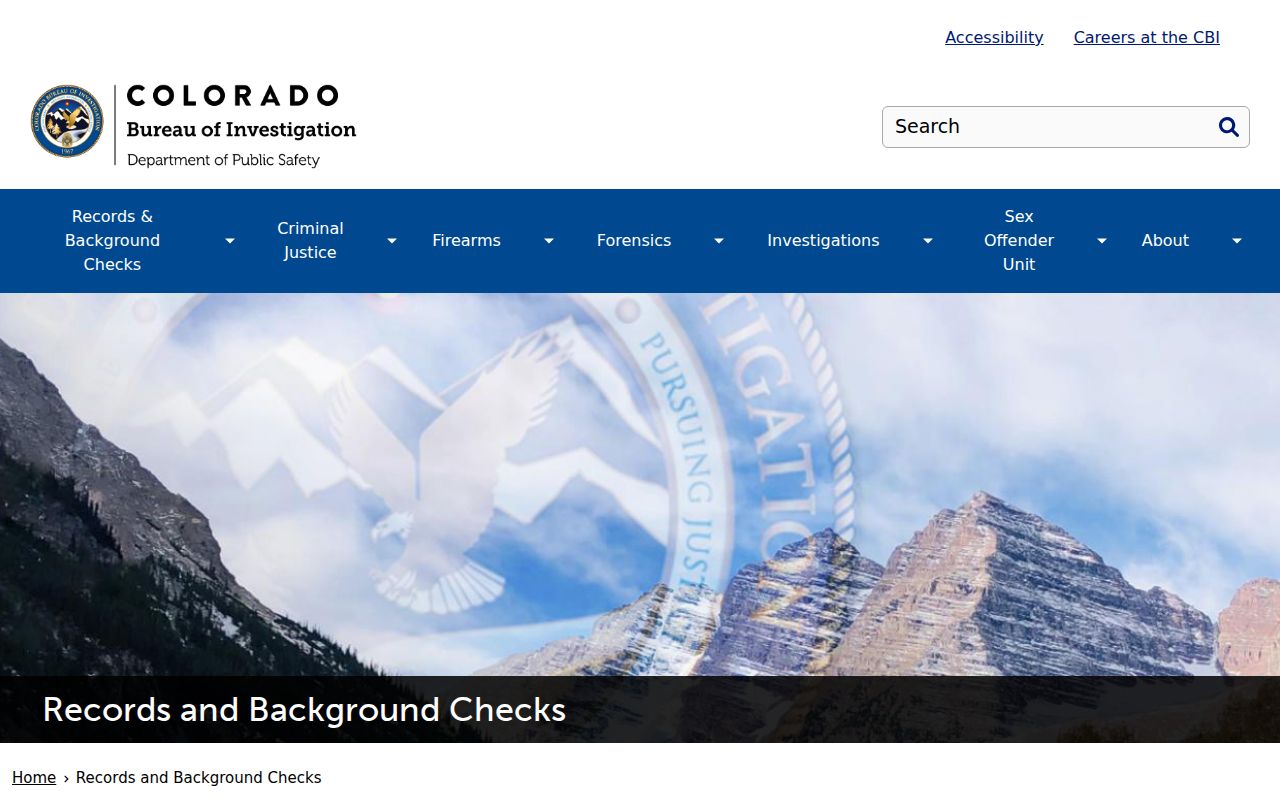
Use it alongside, not instead of, Mineral County court and clerk channels when the full criminal case file is needed.
Find Mineral County Criminal Records
Mineral County does not publish a county-operated criminal case portal. Start with the Colorado Judicial Branch docket search for hearing dates and visible docket cards. Docket results can show date, time, duration, party name, case number, hearing type, location, appearance type, and courtroom. They do not provide the whole complaint, police report, sentencing order, or certified file.
- Search the Colorado Judicial Branch docket for the name, date range, or known case number.
- Note the case number and case class, such as CR for criminal district court or M for misdemeanor county court.
- Use the Colorado Judicial Branch Record/Document Request Form to ask for the Register of Action, complaint or information, disposition or sentence order, ticket, or protection order.
- Contact Mineral County Clerk of Court at 719-658-2575 or MineralClerk@judicial.state.co.us if the record is older, restricted, suppressed, or unclear.
- Use CBI ICHC only for Colorado criminal history arrest information, not certified court records.
CoCourts is another court-data path described as a Colorado Judicial Branch initiative or partner for Register of Action access. Use it with care. Its public description says district-court searches can include criminal cases, but sealed cases are not available, juvenile and probate case types are not included, and non-public information such as Social Security numbers and street addresses is omitted.
Published court-record fees include $0.25 per page, $20 for certified or exemplified copies, $25 for a transcript of judgment, $20 for a certificate of satisfaction, $5 for a name search, actual off-site retrieval costs, and $30 per hour for redaction or file review after the first hour. The form warns that suppressed cases, juvenile records, probate records, and records with protected information may require a U.S. government-issued photo ID.
Colorado Internet Criminal History Check is the state name-based criminal-history search connected to CBI records.
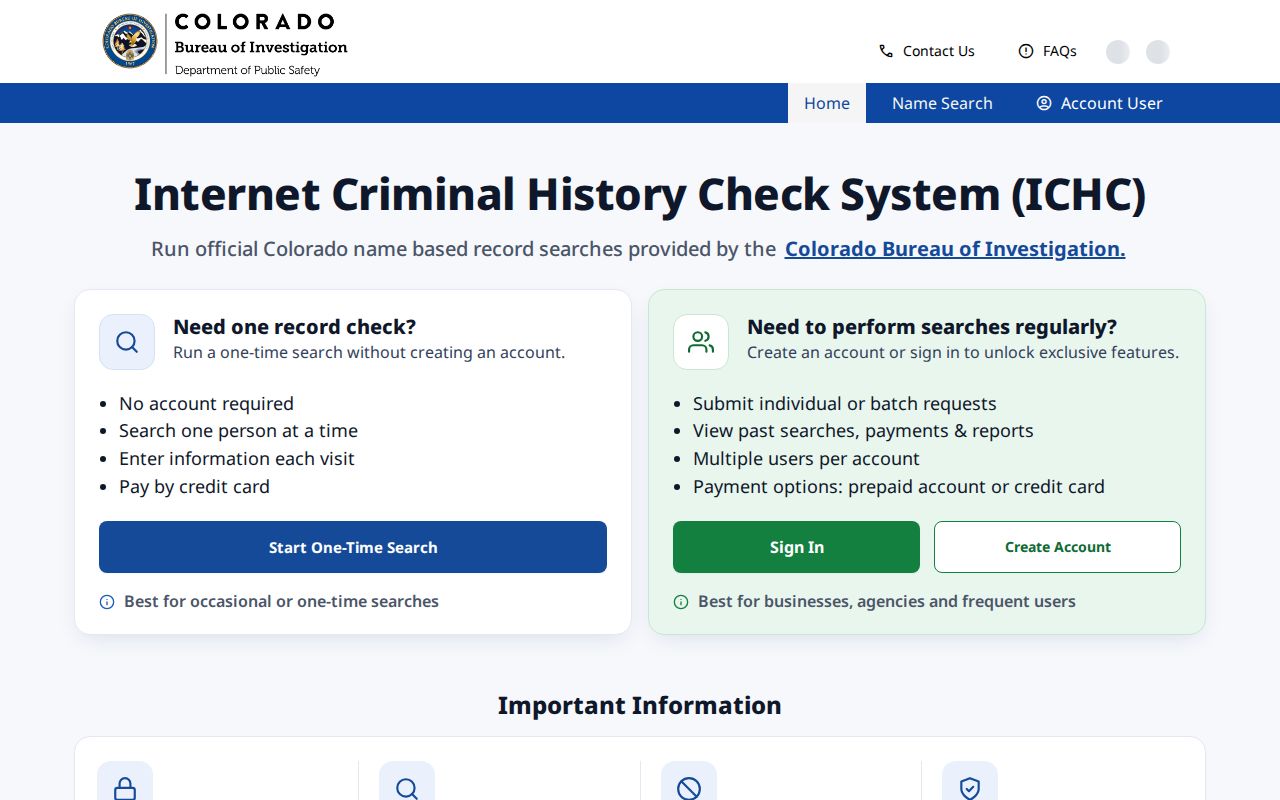
Its results can help with Colorado arrest-history context, while formal Mineral County criminal case documents still come through court channels.
Mineral County Criminal Case Flow
A Mineral County criminal case usually begins in the record when a complaint, information, ticket, or similar charging paper is filed. An advisement or arraignment entry can follow. The court record then tracks hearings, motions, bond terms, plea settings, trial settings, disposition, and sentencing. A single case may contain several charges, and each charge can end in a different way.
Case flow: arrest or citation › complaint or information › advisement or arraignment › bond and pretrial hearings › plea, dismissal, or trial › disposition › sentence or compliance review.
| Stage | What It Adds to the Record |
|---|---|
| Complaint or information | The formal charge document filed in court, often requested by name on the Judicial Branch form. |
| Advisement or arraignment | A hearing entry where rights, charges, bond, and plea posture may be addressed. |
| Pretrial and motions | Orders, continuances, bond changes, protection orders, and motion rulings can appear in the case history. |
| Plea or trial | The record shows whether a charge was resolved by plea, dismissal, acquittal, or other disposition. |
| Disposition and sentence | The court's final outcome, fines, probation, jail or prison sentence, and related conditions when public and releasable. |
Note: A docket card may show a hearing without showing the full filing that caused the hearing.
What Criminal Records Show
Mineral County docket samples include case numbers such as 2025CR500, 2025M6, and traffic-style T cases. Public docket cards can show one visible party name, the hearing date and time, hearing type, duration, location as Mineral County, appearance type such as telephone where listed, and courtroom. The deeper case file is requested through the clerk or Judicial Branch form.
| Field | What It Shows |
|---|---|
| Case number | Year, case class, and sequence used by the court to locate the file. |
| Defendant name | The person accused in the criminal case, with private identifiers redacted from public access. |
| Charge document | Complaint, information, ticket, or other filing that states the accusation. |
| Hearings | Arraignment, first hearing, pretrial conference, disposition hearing, review hearing, or similar events. |
| Disposition | Outcome of the charge, such as guilty plea, dismissal, acquittal, or other resolution. |
| Sentence | Jail, prison, probation, fines, costs, protection orders, or compliance terms if part of the public file. |
- Information
- A prosecutor-filed charging document in a criminal case.
- Disposition
- The outcome or resolution of a case or charge.
- Minute order
- A short court entry that records what happened at a hearing.
- Register of Action
- A chronological case summary with filings, events, hearings, charges, sentence entries, and minute orders.
The Internet Criminal History Check FAQ explains CBI search criteria, costs, and public-result exclusions.
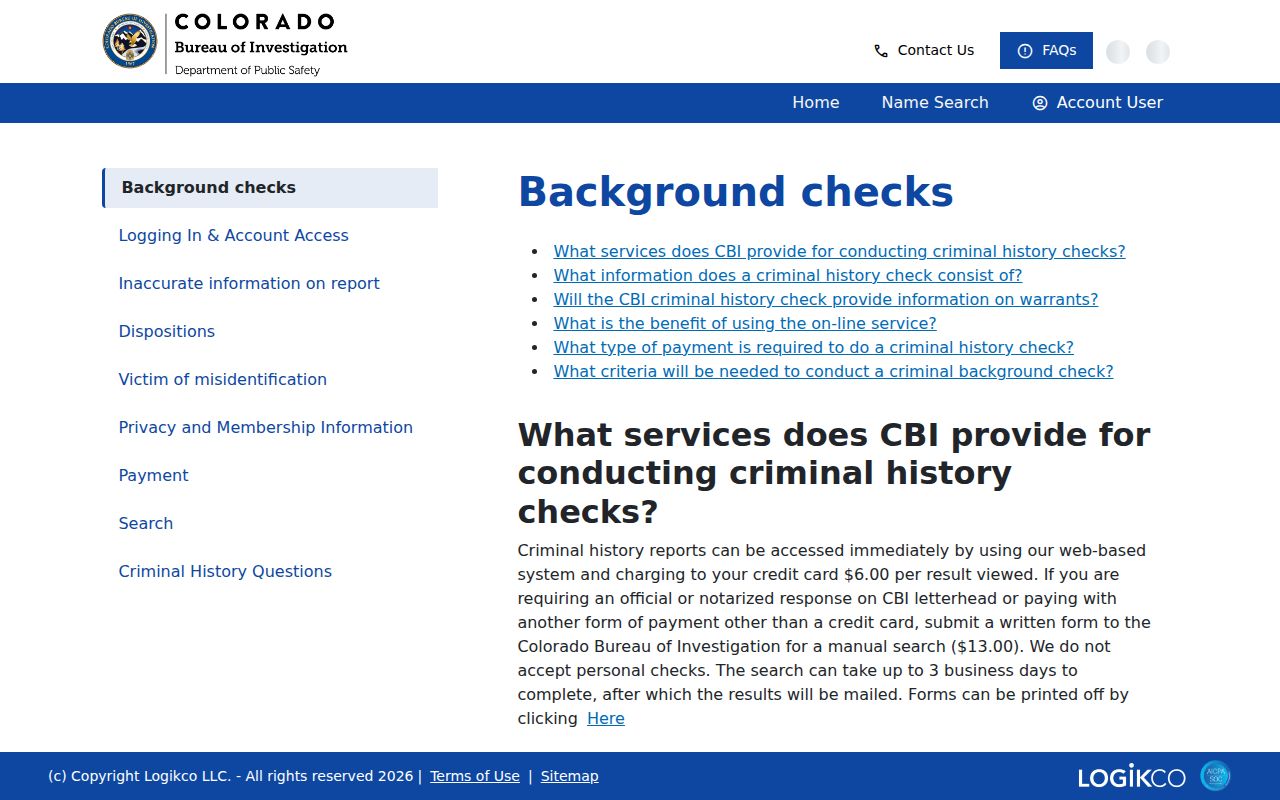
The FAQ is most useful when a reader needs to understand why CBI history results and court records do not match one for one.
Charges vs Convictions
Being charged in Mineral County is not the same as being convicted. A charge is an accusation filed with the court. A conviction is a final outcome after a guilty plea, verdict, or other conviction event. A criminal case file can include charges that were reduced, amended, dismissed, or resolved in different ways. That is why a disposition or sentence order is often more useful than a docket search alone.
| Point | Charge | Conviction |
|---|---|---|
| Record stage | Appears when filed or alleged in court. | Appears after plea, verdict, or qualifying judgment. |
| Meaning | An accusation that still may change. | A resolved finding tied to sentence or judgment. |
| Best document | Complaint, information, ticket, or ROA. | Disposition or sentence order and ROA. |
| CBI limits | CBI may show Colorado arrest history based on fingerprints. | CBI does not replace certified court disposition records. |
Sealed vs Expunged Records
Colorado treats sealing and expungement as different ideas. A sealed record is hidden from public view but still exists for authorized users. Expungement is most often used in juvenile contexts in Colorado and means removal or legal suppression under a separate framework. The Colorado Judicial Branch sealed case search confirms only conviction records automatically sealed under C.R.S. 13-3-117. It does not confirm every possible sealing order.
| Point | Sealed | Expunged |
|---|---|---|
| Public view | Hidden from ordinary public search when sealed by law or order. | Suppressed or removed under the applicable juvenile or statutory process. |
| Record existence | The record still exists for authorized access. | Access and treatment depend on the expungement statute and order. |
| Mineral County effect | The clerk, CBI, and other custodians restrict covered records as required. | Juvenile matters require special care and are not ordinary public files. |
Chief Justice Directive 05-01 governs public access to Colorado court records. C.R.S. 24-72-301 et seq. governs criminal justice records, and C.R.S. 24-72-703 addresses sealing of arrest and criminal justice records. Juvenile delinquency records have added restrictions under C.R.S. 19-1-304.
Districtwide Criminal Offices
Mineral County criminal cases are part of a broader San Luis Valley legal network. The 12th Judicial District Attorney's Office prosecutes state criminal charges for Mineral County and the neighboring district counties. The DA decides what formal charges to file after an arrest, so arrest records and court charges can differ.
The Colorado State Public Defender Alamosa office serves Mineral County for eligible defendants. The office is listed at 610 Main St., Alamosa, CO 81101, with phone (719) 589-9615, fax (719) 589-6178, and email Alamosa@coloradodefenders.us. Public defenders represent people who cannot afford counsel, and the court makes the final eligibility decision.
The 12th Judicial District Attorney site is the districtwide prosecution source for Mineral County state criminal cases.
That districtwide role explains why charge decisions may come from an office outside Creede even when the case is filed in Mineral County.
Important: Public criminal record lookups are not FCRA consumer reports and must be verified with the official custodian.
Public Record Search
Sponsored Results